
From Patek to Vetta: The Enduring Legacy of the Valjoux 23
The Valjoux 23 is one of the most important movements in the history of vintage chronographs. Introduced in 1916, it powered countless chronographs, including some of the most famous examples, right through to the mid 1970s. Its popularity stems not only from its column wheel architecture but also from its compact, elegant dimensions. At roughly 29.5 mm in diameter and around 6 mm thick, it fits comfortably in both dressy chronographs and larger, sportier cases.

Origin and design
Valjoux was founded in 1901 in the Vallée de Joux. Just two years after releasing the Calibre 22 in 1914, the company introduced the Calibre 23 in 1916. The Valjoux 23 is a manual‑wind chronograph movement with column wheel control and a two‑register layout: a running seconds subdial at 9 o’clock and a 30‑minute chronograph counter at 3 o’clock.

These two registers sit relatively far apart, creating a visually balanced dial even on larger chronographs. Interestingly, early versions of the Valjoux 23 were monopushers; by the 1940s, the design had evolved into the now‑familiar two‑pusher layout.
Famous chronographs powered by the Valjoux 23
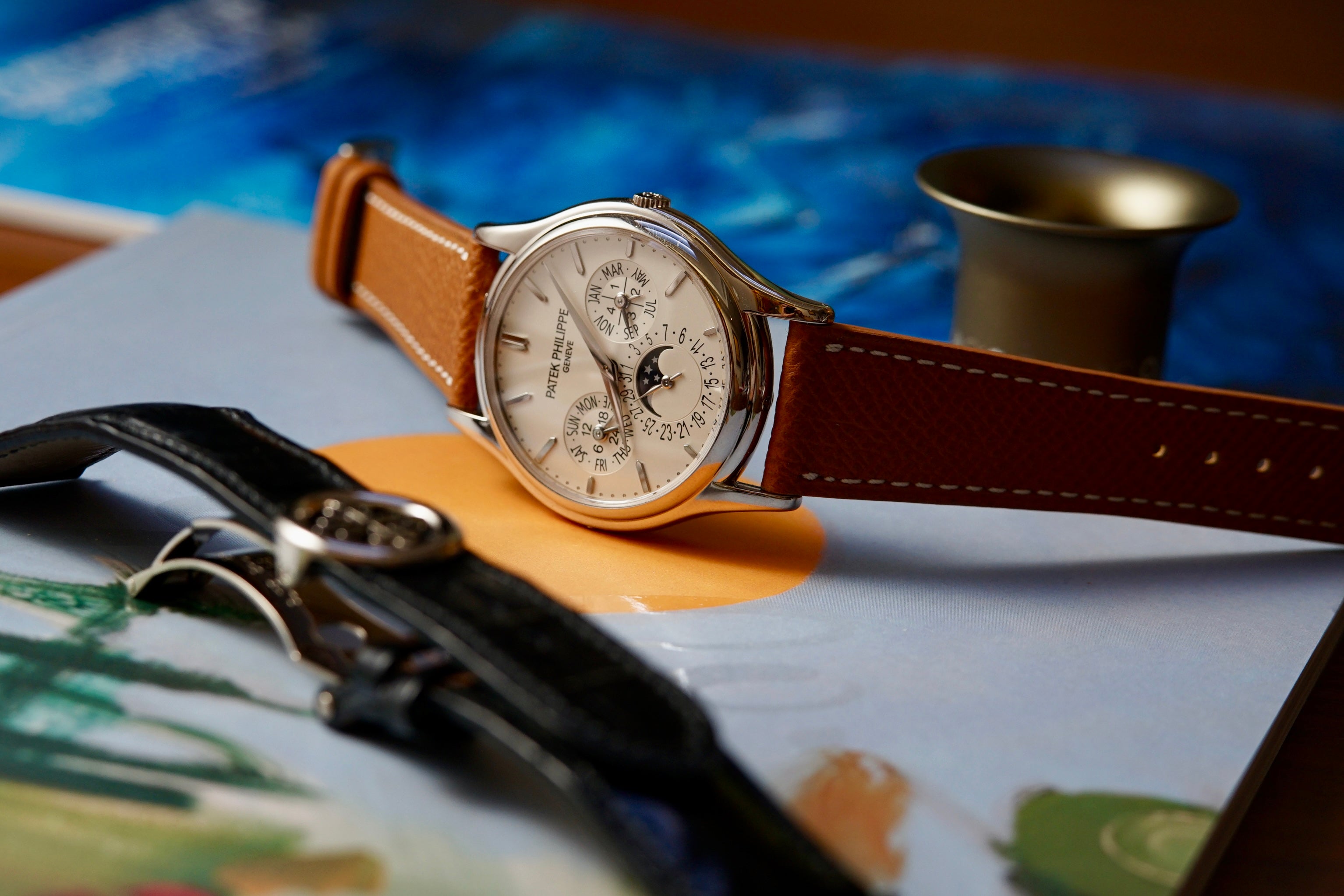
The Valjoux 23 holds a prominent place in vintage watch history. The most notable chronographs based on this movement is the Caliber 13 on Patek Philippe 1518.

Valjoux 23 based Calibre 130, modified by Patek Philippe. Photo credit: Hodinkee
It also appears in many legendary Rolex references, such as the 3525 and 4062. In fact, numerous pre‑Daytona Rolex chronographs used the Valjoux 23 or derivatives of it before the brand transitioned to the Valjoux 72.

Rolex Ref. 3525 movement. Photo credit: Bernardini
Thanks to its adoption by marques like Patek Philippe, Vacheron Constantin, and Audemars Piguet, the Valjoux 23 quickly became the default high‑end chronograph movement for brands that did not produce their own in‑house calibres.
Vetta chronographs, the Vetta 130, and the Valjoux 23
The Valjoux 23 also found its way into smaller brands such as Wyler, which later became Wyler Vetta upon entering the Italian market. “Vetta” was a new brand name created by the Binda Group as a marketing strategy to appear less foreign under the Fascist regime in Italy at the time. From the 1940s to the 1960s, Wyler Vetta produced many beautiful chronographs that are now prized by collectors, including the Ermetico and models equipped with the Vetta 130 calibre.

The Vetta 130 is essentially a Valjoux 23 rebranded for the Italian market. On the modern Wyler Vetta website, the Vetta 130 is positioned as the highest‑end calibre in their historical chronograph lineup.

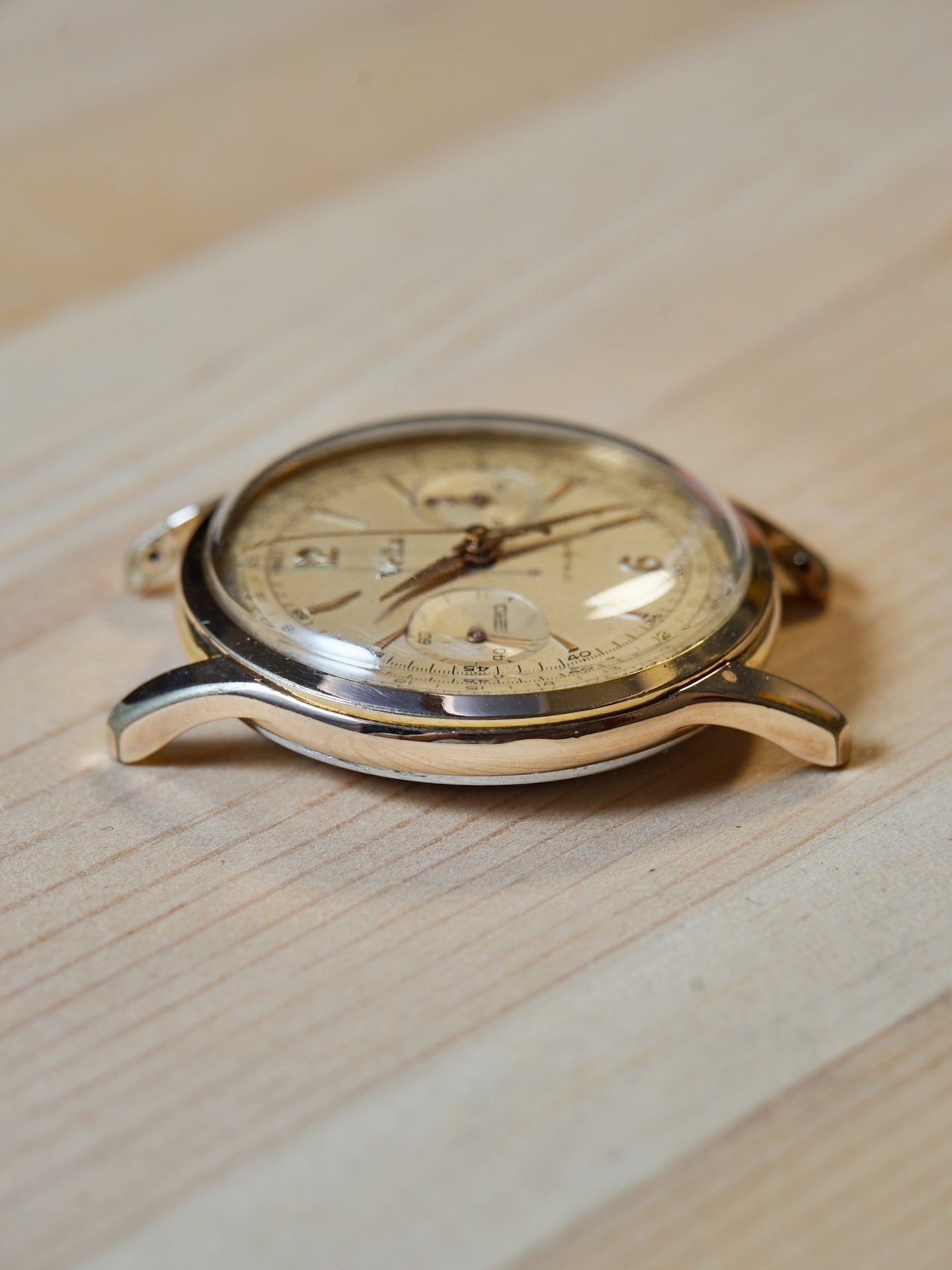
The watch shown here is a beautiful oversized Vetta chronograph, measuring 38 mm and powered by the Vetta 130. This oversized vintage Vetta chronograph features a gold‑capped case with a stainless‑steel caseback. The gold‑plated applied indexes, hands, and “Vetta” logo add a refined touch to the warm, gold‑tone dial.

Collectors who appreciate the Valjoux 23 should not let this piece slip away. It represents an important chapter in the history of both the Valjoux 23 and Wyler Vetta’s vintage chronographs.