
Best Watch Straps for Vintage Watches: How to Choose the Right Leather, Colour and Taper for 1950s–1970s Dress Watches and Chronographs
“Changing up the strap on your watch can serve several purposes—from simply replacing something that’s worn out to completely changing the look of your watch. It’s a relatively inexpensive way to make a big change in how it looks and feels.”
Why Vintage Watches Need Thinner, Smarter Straps
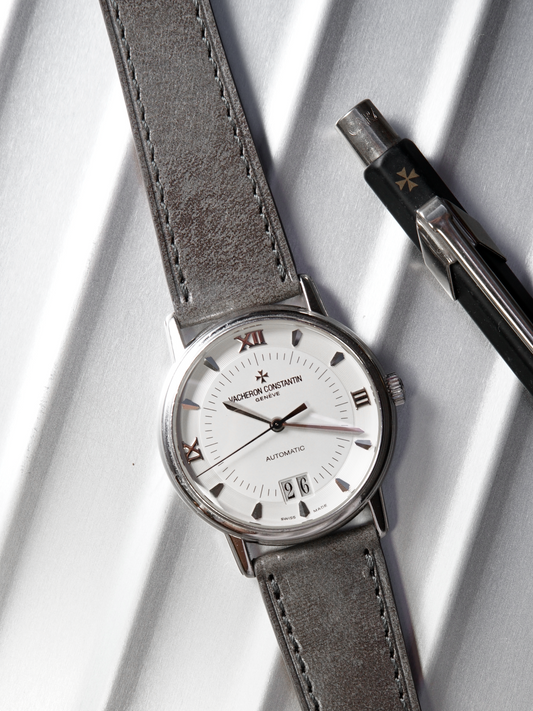
Most 50s–70s pieces were designed around slim profiles, narrow lugs and elegant proportions. Thick, heavily padded “modern” straps tend to overpower them, making the watch sit too tall and look clumsy from the side. That’s why I almost always reach for thinly padded straps with a strong taper to 16 mm or less at the buckle for vintage.
For a first “safe” choice on a 34–36 mm dress watch, something like this works almost every time:
- Black or dark brown Togo or Alran, 18 or 19 mm lug width, tapering to 16 mm
- Slim padding
- Full stitching, with either matching or gentle contrast thread
- Length sized properly so the buckle sits centered on your wrist

This kind of build preserves the original elegance while still feeling modern and wearable day to day.
My Go‑To Materials: Togo, Alran, Epsom, Buttero
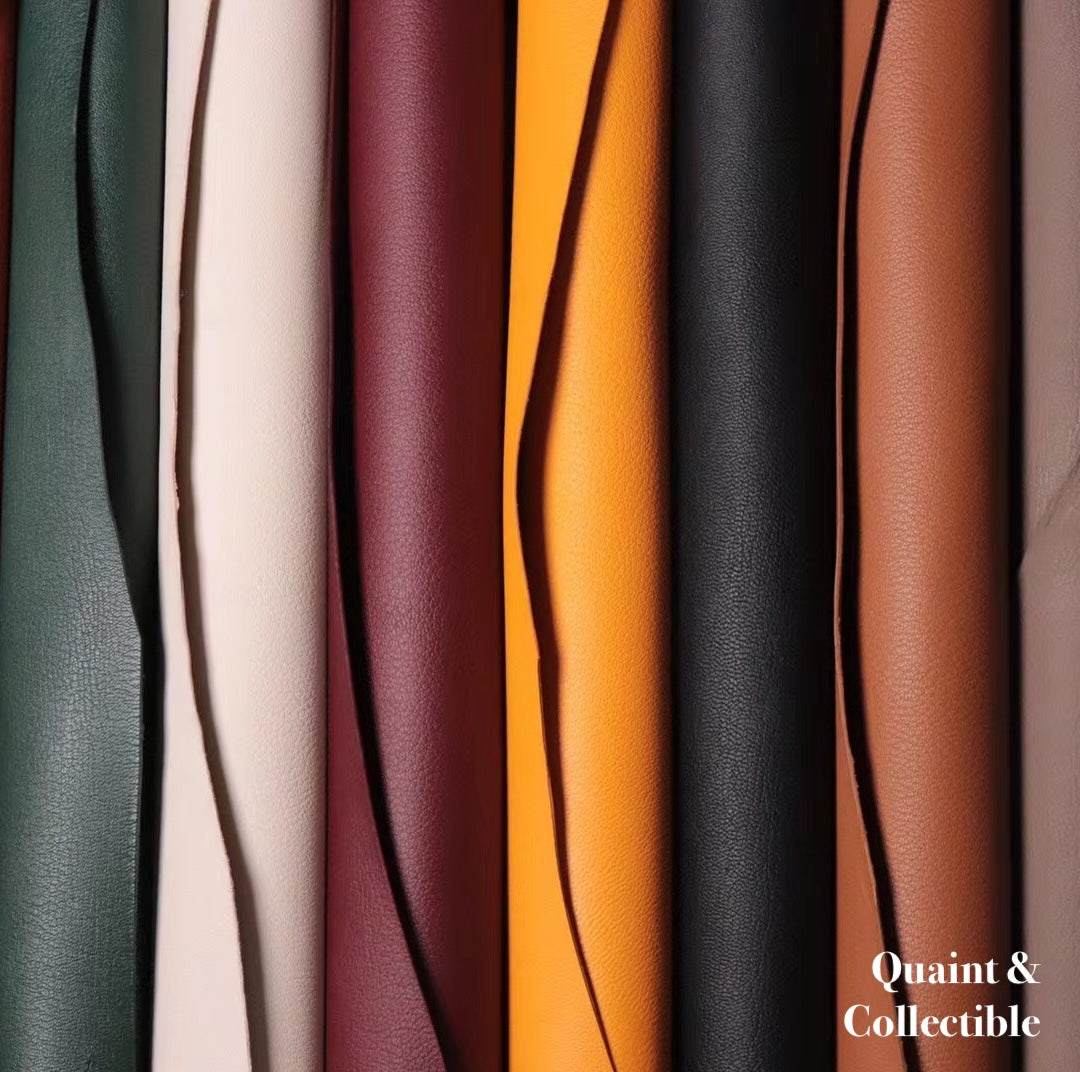
For 50s–70s dress pieces and chronographs, I keep coming back to four leathers: Togo, Alran, Epsom and Buttero. Each brings a slightly different character.
- Togo: Irregular pebbled grain, soft but with body, great when you want texture without shouting.
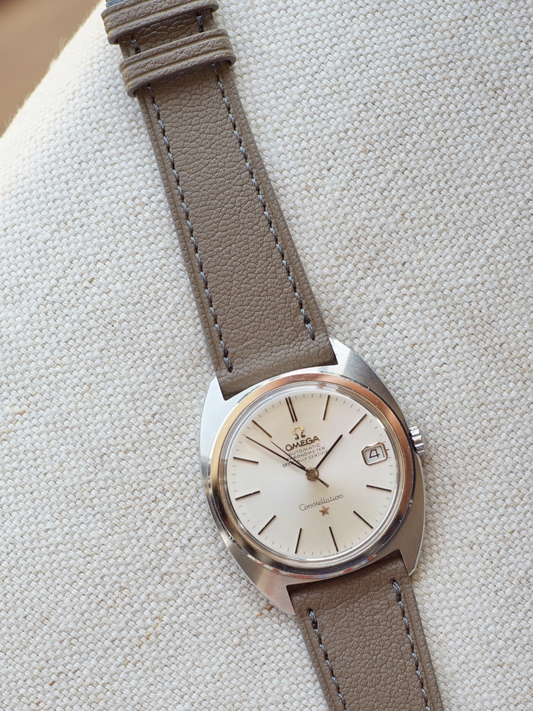
- Alran (goatskin): Supple right out of the box, fine grain that works especially well on smaller 34 mm cases.
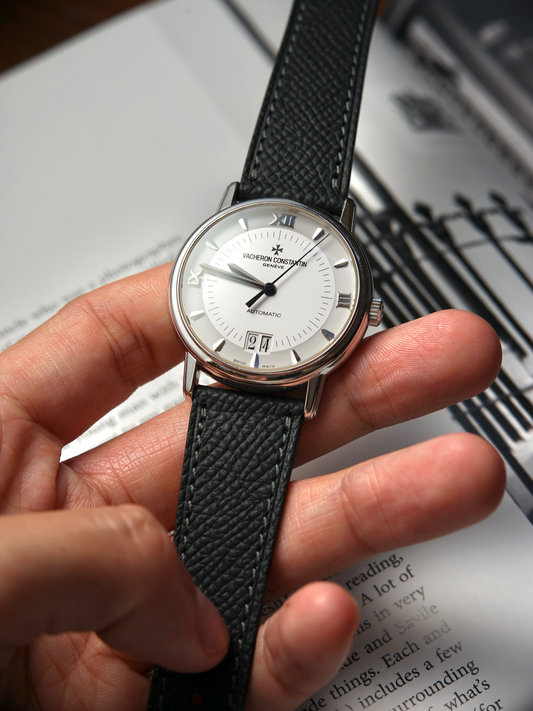
- Epsom: More structured, crisp grain, good when you want a cleaner, slightly dressier look.
- Buttero: Smooth, denser feel that darkens and develops a rich patina with wear, perfect if you enjoy visible aging.
A good quality leather strap can last years if taken care of properly. Buttero in particular rewards regular wear, gradually picking up depth of colour, while Alran tends to stay soft and comfortable for a long time.

Left: Epsom Leather; Right: Smooth Calf Leather
Colour, Grain and Dial: Simple Rules That Work
For most vintage watches, black and brown are still the workhorses. They’re easy to pair with both steel and gold cases and rarely look “wrong,” which makes them perfect anchors for a small strap rotation.
Once you have those covered, blue is a very natural next step—especially navy or deep ink tones, which feel modern but still respectful to mid‑century design. If you want a strap that feels like a new watch without buying a new watch, changing to a fresh leather in a different color is one of the best ways to get that effect.

A few practical pairing rules that work well on 50s–70s pieces:
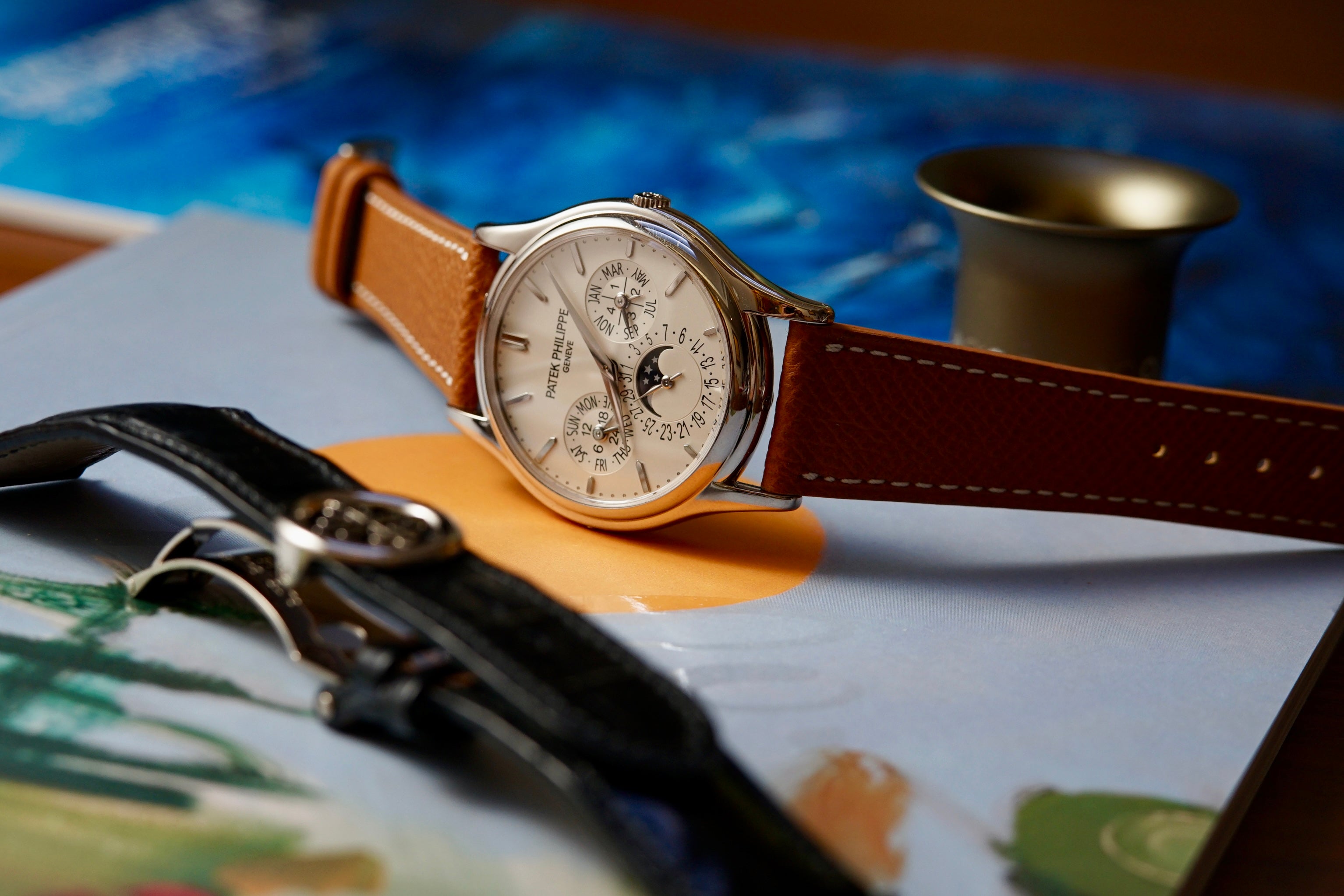
- Complicated dial (triple calendar, busy chronograph, lots of text): go for simpler grains like smooth calf, fine Alran or subtle Togo so the strap doesn’t fight the dial.
- Simple dial (two‑hand dress, minimal printing): you can lean into stronger grains like pronounced Togo or a more visible Epsom pattern.
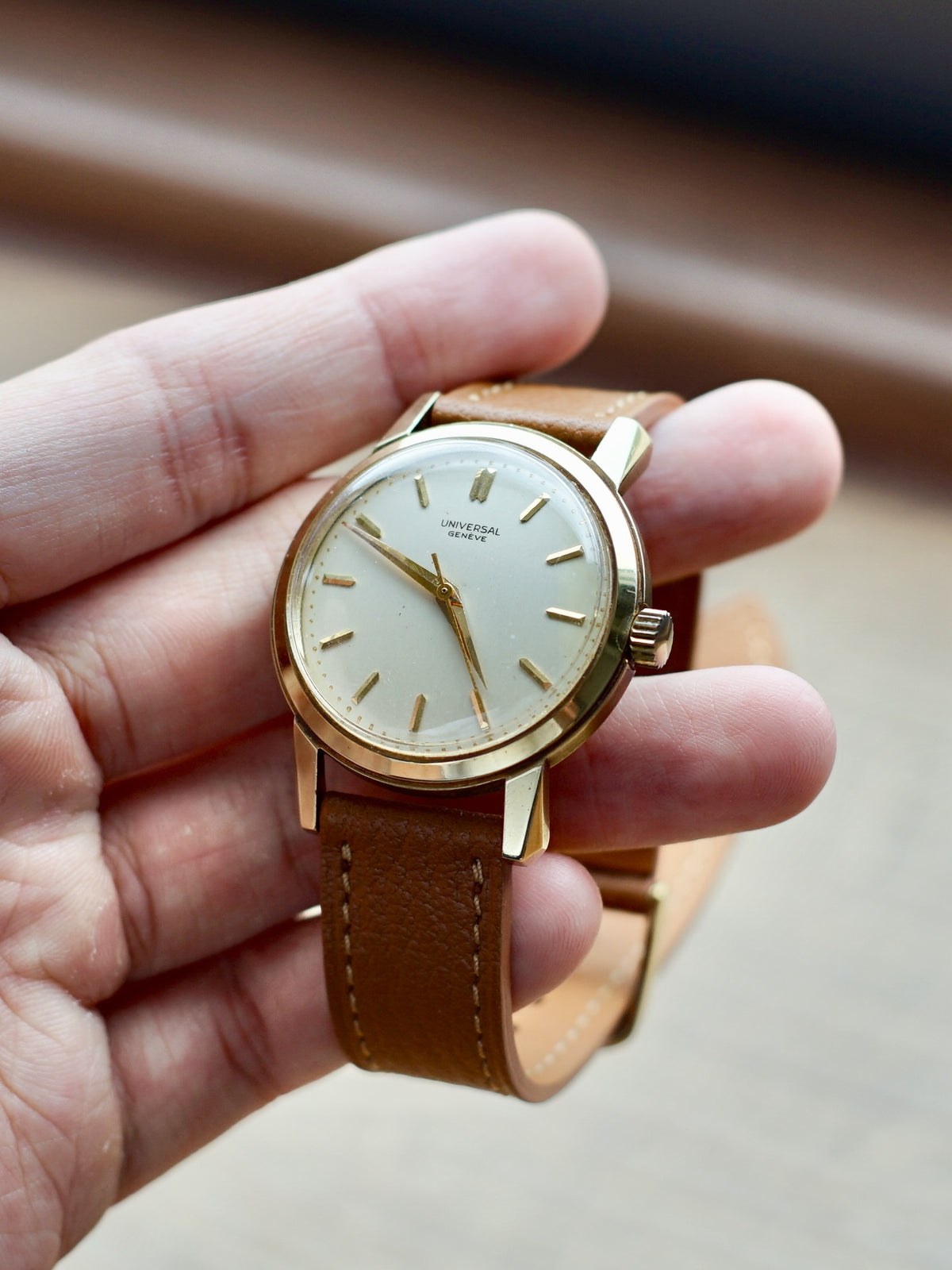
- Warm dials (cream, champagne, tropical brown): brown Nubuck or Alran taupe works beautifully; the warmth of the leather echoes the patina.
- Cool dials (silver sunburst, white, grey): black, navy or darker browns keep everything balanced and clean.

Thickness, Taper and Stitching for 50s–70s Cases
On a 34 mm dress watch, proportions are everything. I generally like:
- Lug width: 17–19 mm (as close to original as possible)
- Taper: down to 16 mm or even 14 mm, depending on how delicate the watch is
- Stitching: full stitching, often with subtle contrast (e.g. cream on brown, light grey on black) to add a bit of life without making it sporty
On vintage chronographs, especially 36–38 mm, I often prefer a slightly more purposeful look:
- Slightly less aggressive taper (e.g. 19→16, 20→16) to keep some visual weight near the lugs
- Two‑stitch or minimal stitch styles near the lugs to nod to tool‑watch roots
- Medium‑tone browns, charcoal, navy or desaturated colors to keep the dial center stage

Exotics and Vintage Dress: When to Use Them
When you’re dealing with vintage watches and dress watches, you can really lean into using reptilian grain or exotic straps.
“When you’re dealing with vintage watches and dress watches, you can really lean into using reptilian grain or exotic straps. Lizard or crocodile leather just epitomizes that era and pairs beautifully with gold cases and classic designs.

That said, I don’t think every precious metal case needs crocodile all the time. A well‑chosen Togo, Alran or Epsom strap in brown or black can still look extremely refined on yellow, rose or white gold, while being more relaxed and wearable for everyday use.
For many collectors, a simple rotation of:
- one “serious” exotic (Croc),
- one textured calf/goat (Togo or Alran), and
- one smooth leather (Buttero or similar)
is enough to cover everything from weddings to casual weekends.
Craft, Construction and Why Quality Matters
Each strap might look small, but there is more work involved in a well‑made leather strap than many people expect.
“Each strap that is made undergoes over a dozen different steps and, believe it or not, it’s harder and more involved to make a watch strap than something like a belt. Don’t let the size fool you—quality leather straps take real work.”
Details like:
- consistent thin padding that suits vintage watches,
- clean edge finishing and paint,
- comfortable linings (often water‑resistant and hypoallergenic), and
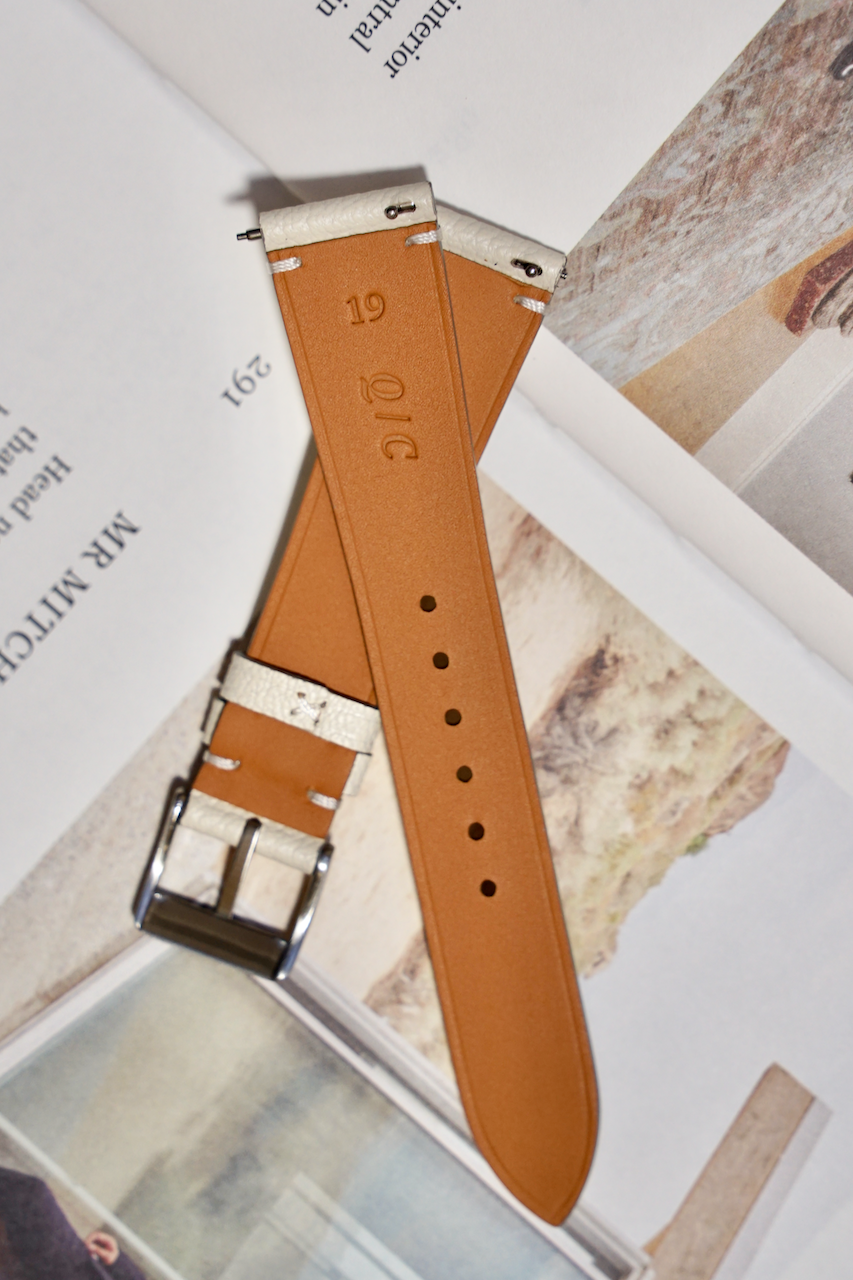
- tapered profiles designed specifically around common vintage lug widths (16–20 mm)
are what make a strap feel “right” on mid‑century pieces.

Quick‑release spring bars are genuinely useful for easy swapping as long as the strap itself is thin enough and the lugs aren’t extremely tight or fragile. When working with more delicate cases or extra‑short lugs, it’s still worth being careful and using tape on the back of the lugs, especially with luxury or sentimental pieces, to avoid scratches while changing straps.
Building a Small, Smart Strap Rotation
If you want a compact but highly usable lineup for 50s–70s dress watches and chronographs, a practical three‑strap capsule could be:
- Black Alran or Togo, 18–19→16 mm, full stitching – for formal and “default” use.
- Medium or dark brown Buttero, 18–19→16 mm, full or minimal contrast stitching – for daily wear and to complement patina.
- Navy or deep blue Epsom or Alran, 18–19→16 mm, tidy stitching – for a modern twist that still respects vintage lines.
From there, you can add one exotic for special occasions or a slightly sportier two‑stitch strap for chronographs. Once you’re comfortable changing out different straps, it opens up a whole new world of styling your watch in an inexpensive way, and straps are a great way to make a huge impression on the overall look of a vintage piece.